



SINDH LIVESTOCK & AQUACULTURE DEVELOPMENT PROJECT (SLADP)
Project Overview
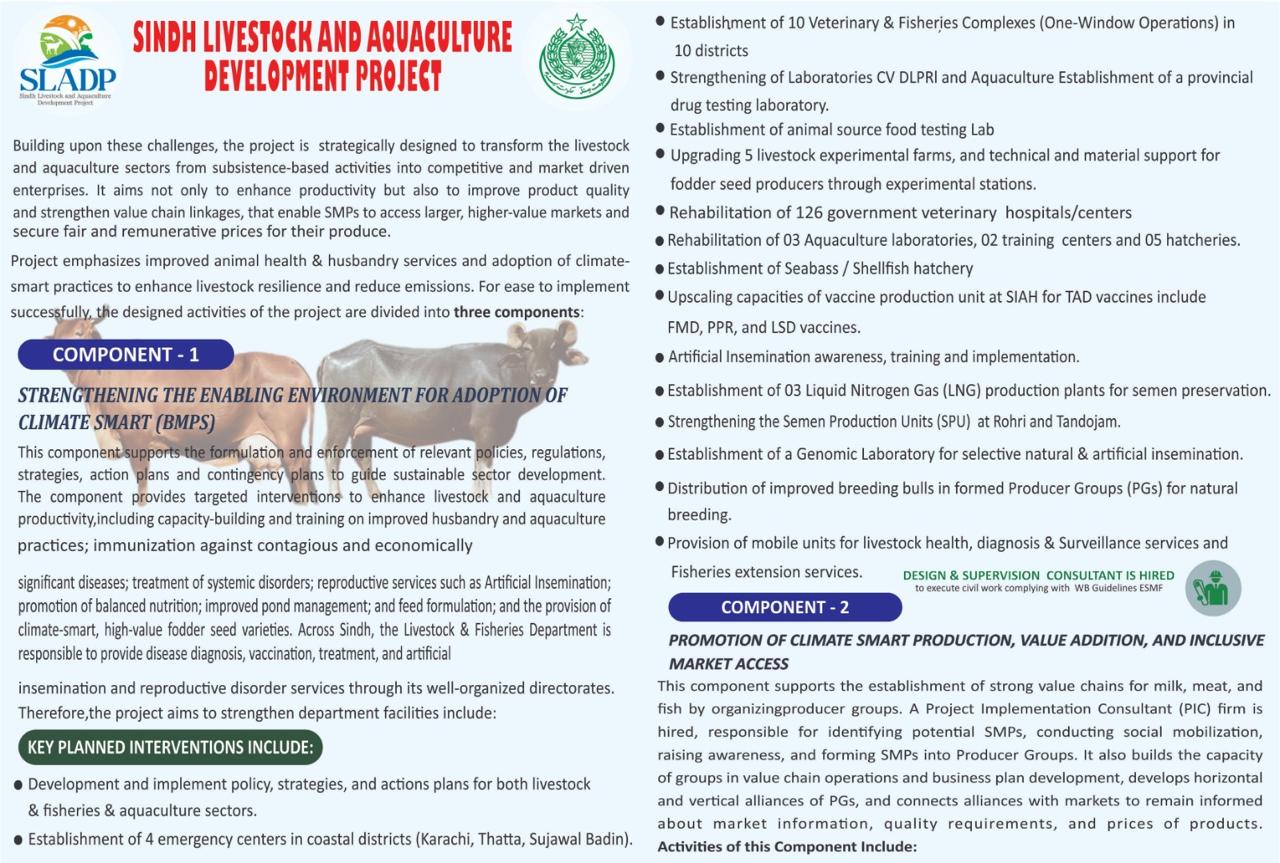
The Sindh Livestock and Aquaculture Development Project (SLADP/LIVAQUA) is a transformative, World Bank-funded initiative of the Government of Sindh, implemented through the Livestock and Fisheries Department (L&FD). Launched in July 2024 with a five-and-a-half-year implementation period (ending December 2029), the project represents a total investment of the World Bank contributing 98% and the remaining 2% costs covered by the Government of Sindh and farmer contributions.
Livestock and aquaculture are the lifelines of Sindh's rural economy, serving as the single-largest employer for over 40 percent of Pakistan's labor force. However, the sector faces significant challenges: low on-farm productivity among small and medium producers (SMPs), limited adoption of good production practices, high post-harvest losses (estimated at 20 percent for dairy), poor infrastructure, and vulnerability to climate shocks like the catastrophic floods of 2022 and recurring droughts. Sindh is among the most climate-affected provinces in Pakistan, making the need for resilient, climate-smart agricultural practices more urgent than ever.
PROJECT LAUNCH
Launched in July 2024 with a five-and-a-half-year implementation period ending December 2029.
IMPLEMENTATION
Implemented through the Livestock and Fisheries Department (L&FD), Government of Sindh.
CLIMATE RESILIENCE
Promotes resilient and climate-smart livestock and aquaculture production systems.
VALUE CHAIN
Addresses the value chain from point of production to value addition and market access.
Vision Statement
To be the digital backbone for a transformed, climate-smart, and competitive livestock and aquaculture sector in Sindh, characterized by data-driven decision-making, transparent governance, and sustainable economic growth for all stakeholders.
Mission Statement
To design, develop, and operationalize a comprehensive and user-centric digital ecosystem that empowers the Sindh Livestock and Fisheries Department, connects farmers to markets and services, and provides real-time data for effective policy and disease management, ultimately fostering a resilient and prosperous sector.
Project Development Objective
The overarching objective of SLADP/LIVAQUA is "to promote climate-smart and competitive small and medium producers in the livestock and aquaculture sectors in Sindh". The project aims to achieve this by addressing the entire value chain from point of production to value addition and market access while integrating climate resilience and gender inclusivity at its core.
Key Targets and Expected Outcomes
Increase in productivity for livestock and aquaculture farmers.
Boost in farmers' income across the value chain.
Reduction in greenhouse gas (GHG) emissions through climate-smart practices.
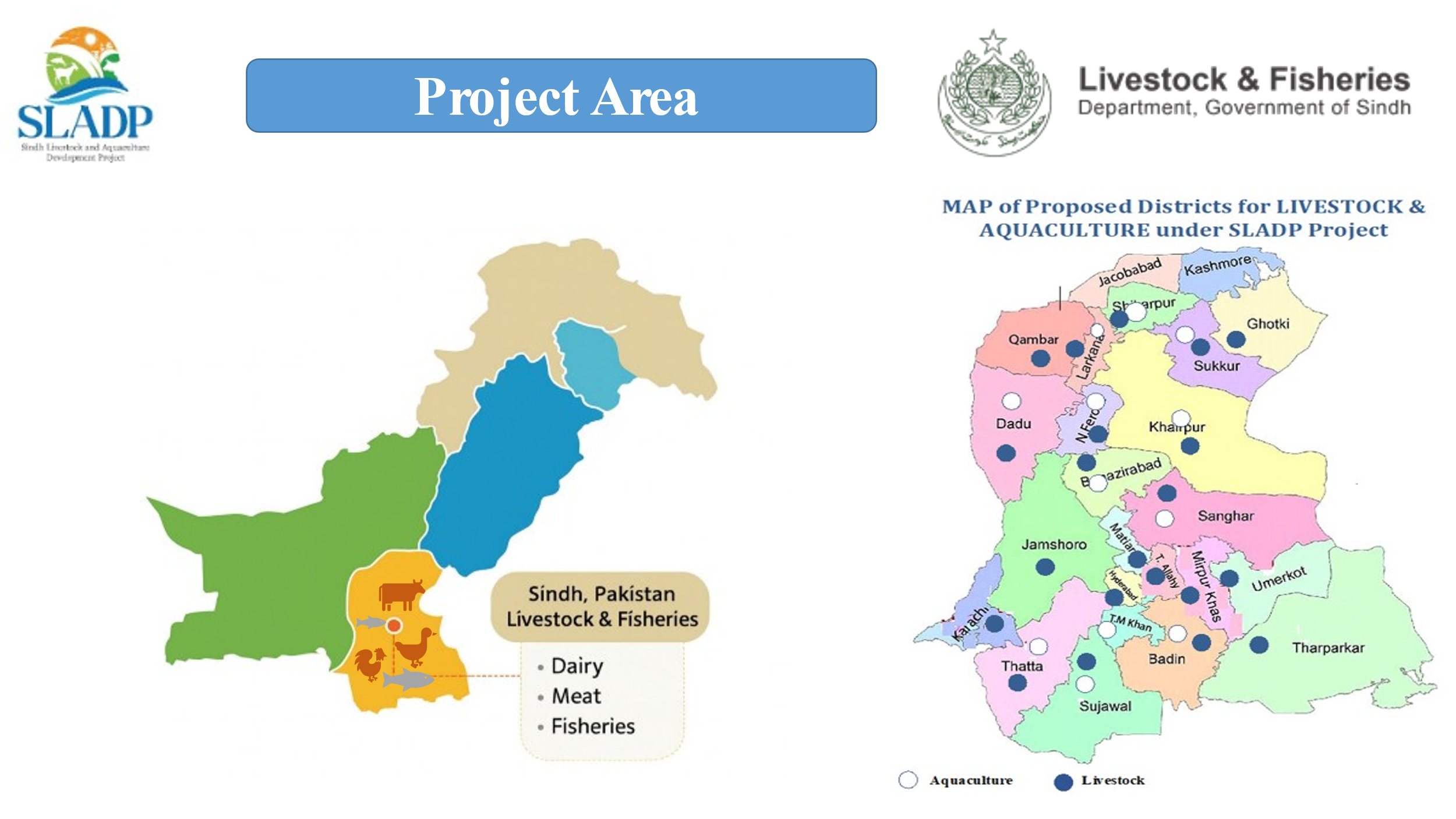
Farming families directly benefited, including 930,000 livestock households and 10,000 aquaculture producers across all districts of Sindh.
Strategic Objectives
Enhance Data-Driven Governance & Policy Implementation
To create a centralized platform that streamlines departmental Human Resource management, inventory tracking, and financial monitoring, ensuring efficient project execution and transparent governance.
Improve Animal Health & Disease Surveillance
To develop a real-time digital dashboard for monitoring disease outbreaks (terrestrial and aquatic) to enable rapid response and control of Transboundary Animal Diseases (TADs), thereby securing livestock assets.
Empower Small & Medium Producers (SMPs) through Information Access
To establish a mobile and web-based feedback and information system that disseminates knowledge on good production practices, climate-smart agriculture, and quality inputs (feed, breeds, fish seed), bridging the gap between public services and farming communities.
Facilitate Value Addition and Commercialization
To create a digital marketplace/trade data dashboard that reduces post-harvest losses by connecting producers directly with buyers and improving access to market pricing information, addressing current infrastructure inefficiencies.
Ensure Scalability and Sustainability
To develop a robust ICT Dashboard (as per the Terms of Reference for consulting services) that includes 24 months of after-development support and maintenance, ensuring the platform remains functional and secure beyond the initial project duration.
Project Focus Areas
Enabling Environment
Policy, labs, vaccine production, FFS Training & food-safety systems.
Animal Health
53 mobile vet Complex 10,TAD Vacination, 126 hospitals & Anti Parasite Treatment.
Aquaculture
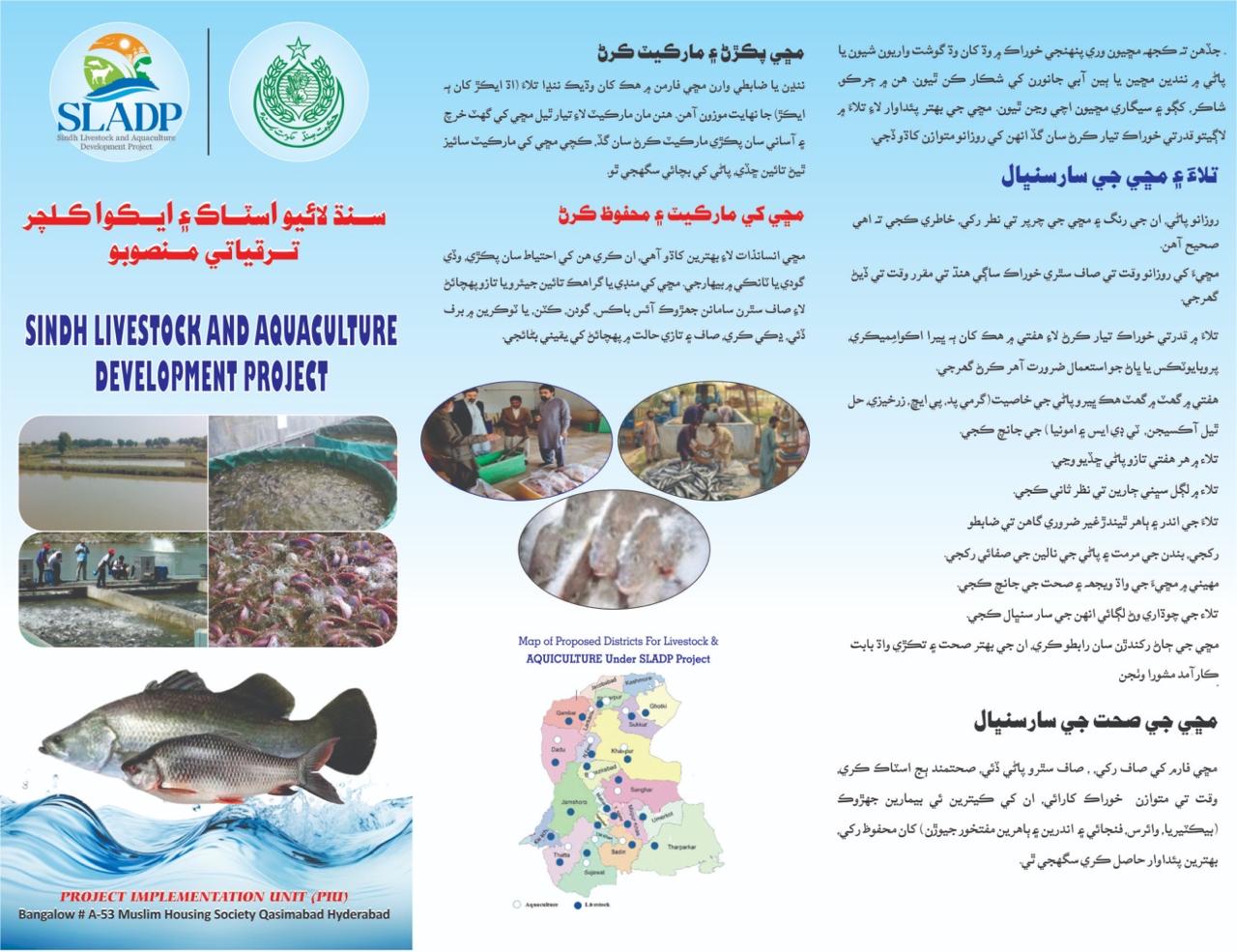
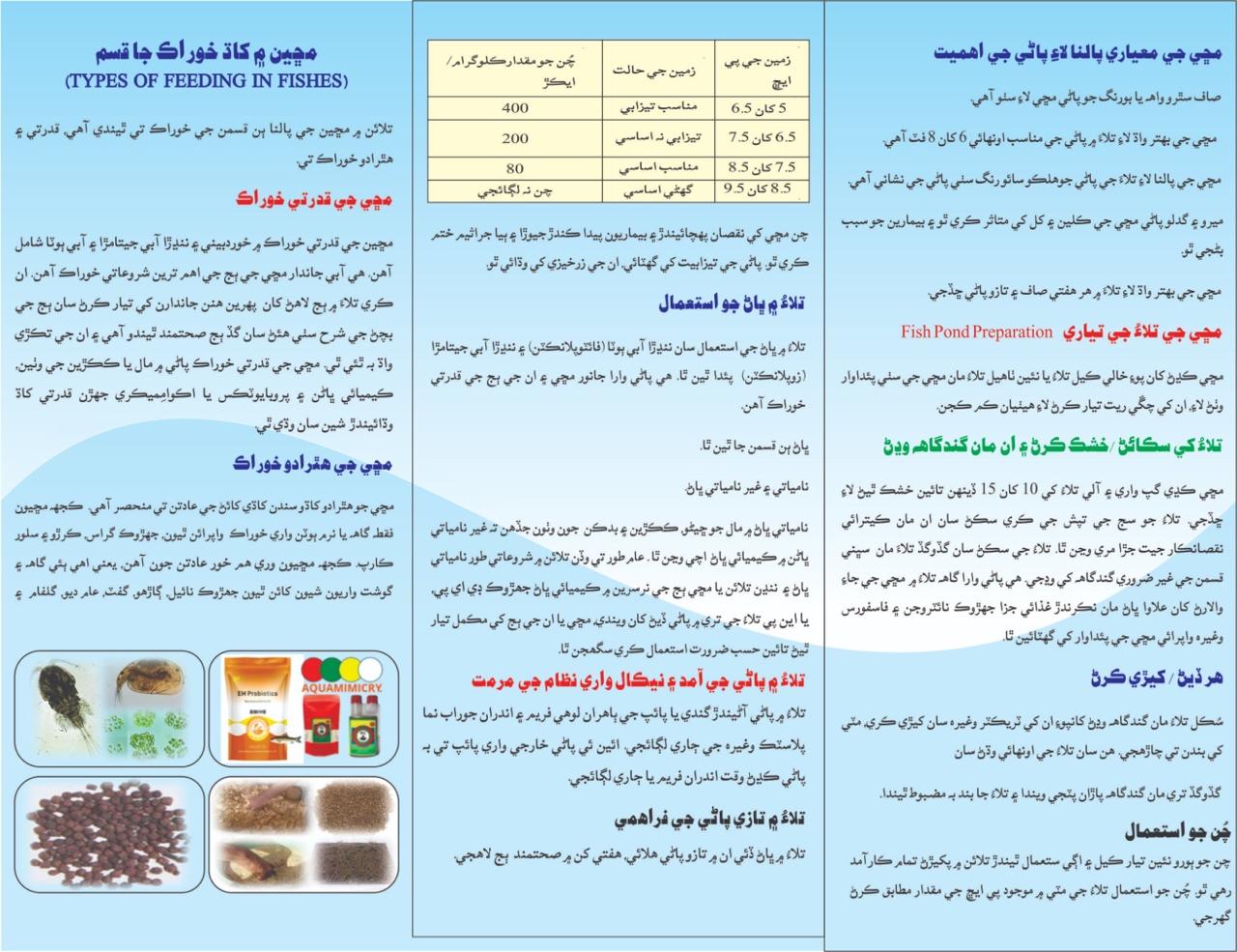
Hatcheries, nurseries & 12 mobile aquaculture laboratories.
Climate-Smart
16% GHG reduction through resilient production practices.
Producer Groups
650 groups — dairy, meat, aquaculture & women-led enterprises.
Digital Dashboards
Five ICT dashboards for reporting & marketing in Livestock, Aquaculture, and Disease Surveillance.
Core Interventions
Core Interventions
1. Strengthening the Enabling Environment
- Development of livestock and aquaculture policies, strategies, and contingency plans.
- Upgradation of disease diagnosis and surveillance laboratories.
- Establishment of a Drug Testing Laboratory.
- Upscaling up vaccine production (LSD, PPR) at the Sindh Institute of Animal Health (SIAH), Karachi.
- Strengthening food safety management and testing systems for animal-sourced foods, water, soil, and aquaculture products.
2. Promoting Climate-Smart Production and Inclusive Markets
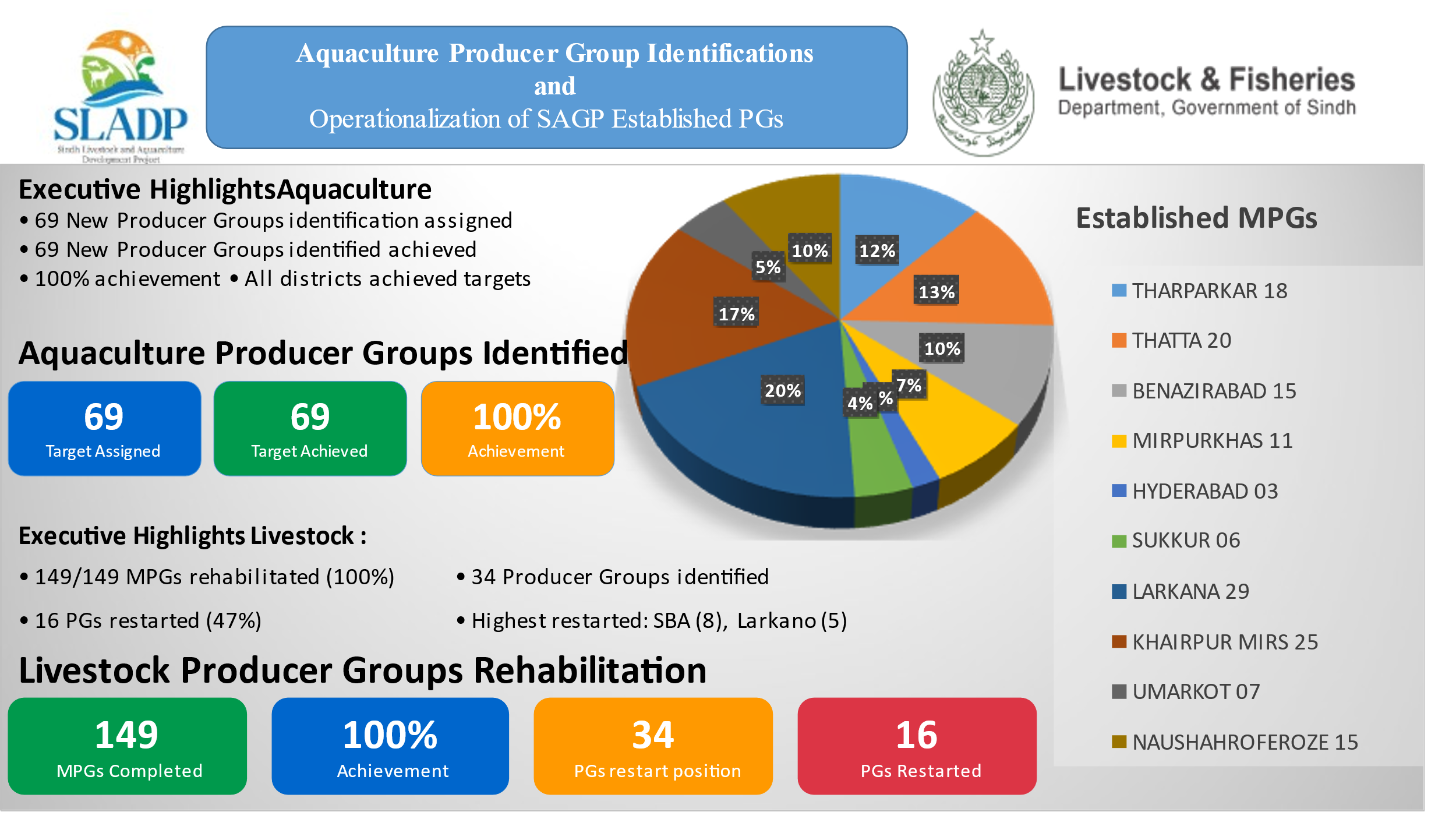
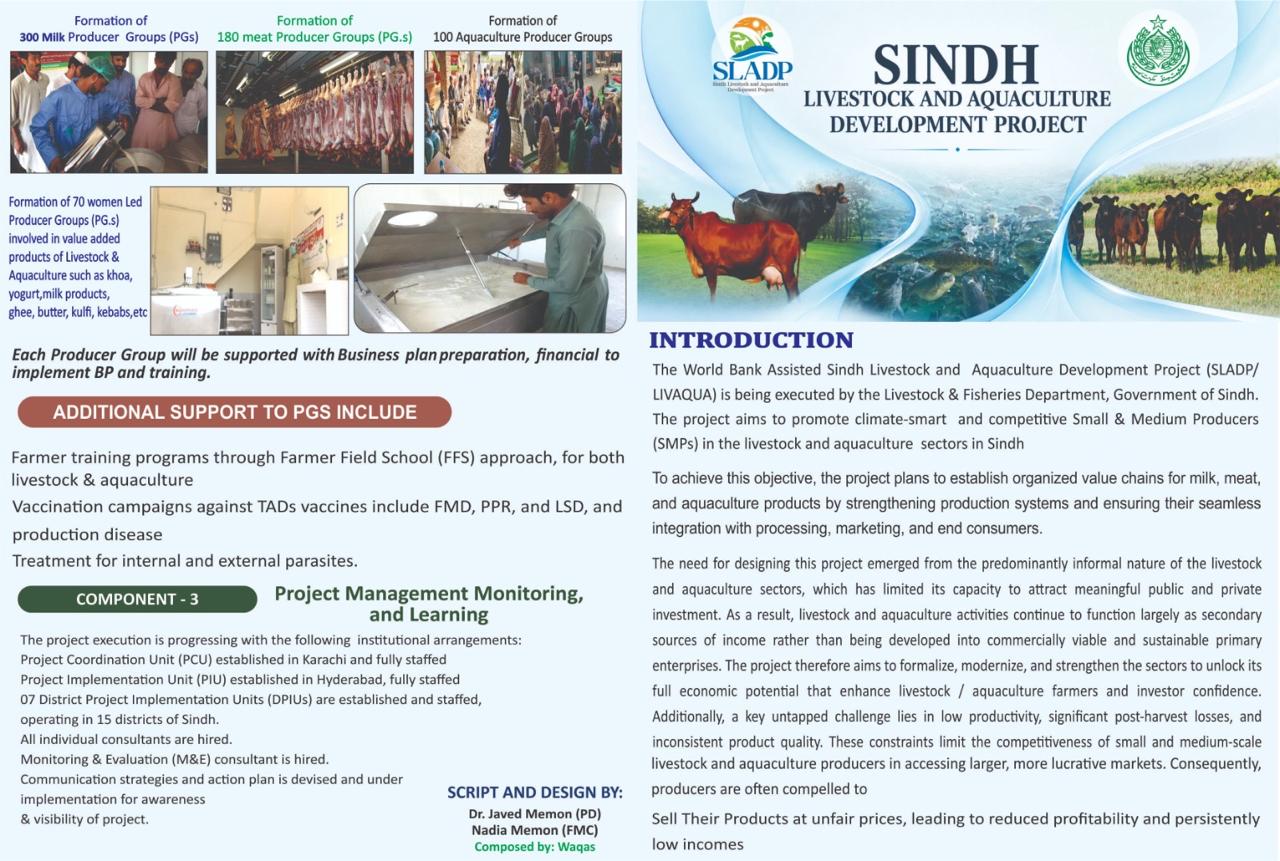
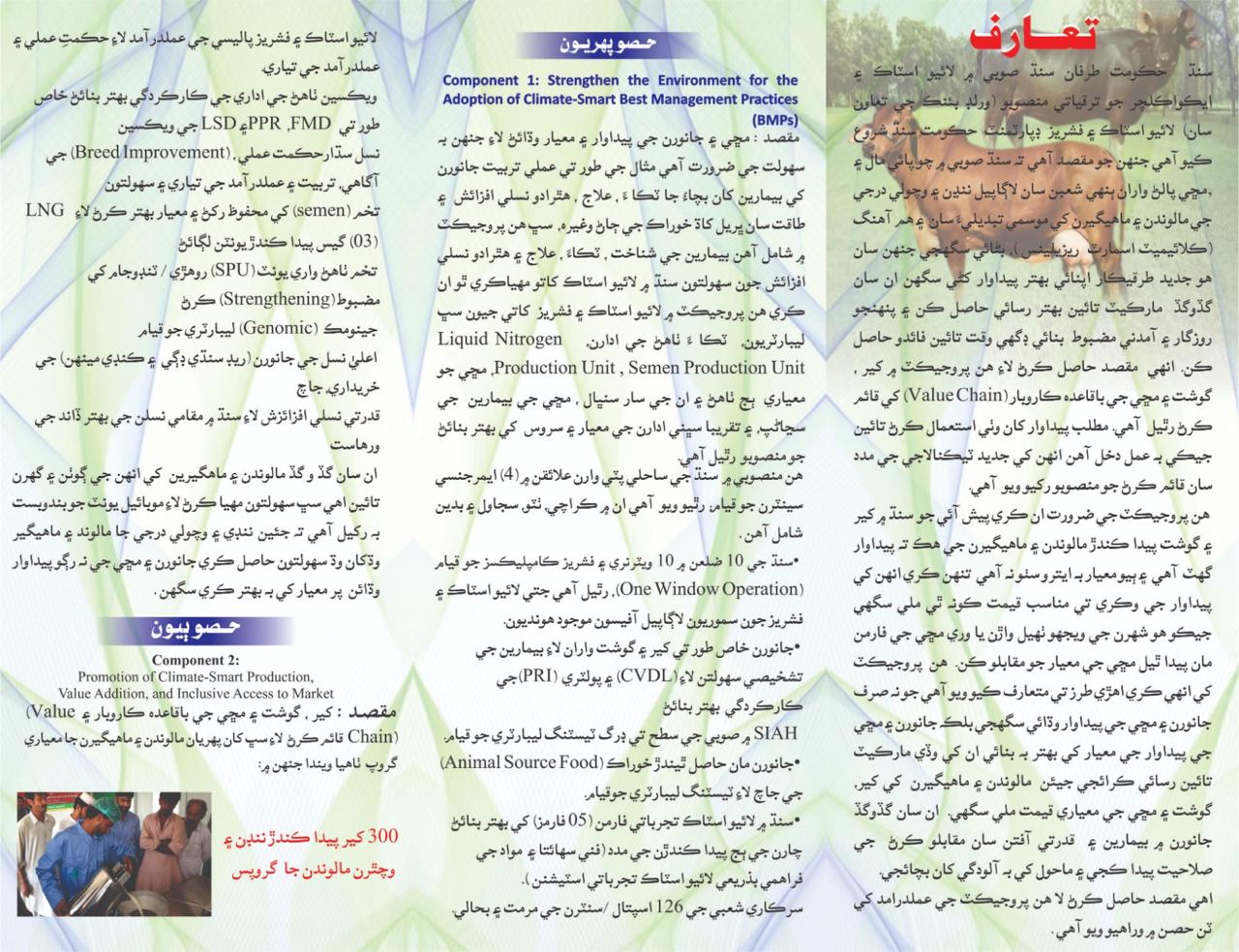
- Formation and support of 650 producer groups: 300 dairy, 180 meat, 100 aquaculture, and 70 women-led enterprises.
- Breed improvement through introduction of improved genetics (semen, fingerlings), upgrading SPUs and hatcheries, and production of 1,400 AI technicians.
- Establishment of 10 District Animal Science Complexes (24/7 service centers) and rehabilitation of 126 veterinary hospitals.
- Provision of 53 mobile veterinary units and 12 mobile aquaculture laboratories.
- Upgradation of fish hatcheries, nurseries, and laboratories, including the establishment of sea bass and shellfish hatcheries.
3. Project Management, Monitoring, and Learning
- Implementation of five digital dashboards for data management, performance monitoring, marketing systems, and decision support.
- Streamlined HR management, inventory tracking, farmer feedback, trade data, and disease surveillance (terrestrial and aquatic).
Project Components
Component 1: Strengthening Enabling Environment
Component 2: Promotion of Climate-Smart Production & Markets
Component 3: Project Management, Monitoring, and Learning
Grievance Redressal Mechanism
At SLADP / LIVAQUA, we are committed to providing the highest standard of care and services to all individuals and communities we serve. We understand that occasionally, concerns and grievances may arise. That's why we have established a robust Grievance Redressal Mechanism (GRM), dedicated to addressing your feedback, complaints, and issues promptly and fairly. Our goal is to ensure that every voice is heard, and every concern is resolved in a transparent and empathetic manner. Your input is invaluable in helping us continuously improve and tailor our programs to better meet your needs. We invite you to reach out to us through our GRM form given below, to help us maintain the highest quality of care and accountability.
Detailed Core Interventions
Structured actions across enabling environment, inclusive markets, and data-driven project management.
Core Intervention 1
Strengthening the Enabling Environment
- Development of livestock and aquaculture policies, strategies, and contingency plans
- Upgradation of disease diagnosis and surveillance laboratories
- Establishment of a Drug Testing Laboratory
- Upscaling up vaccine production (LSD, PPR) at the Sindh Institute of Animal Health (SIAH), Karachi
- Strengthening food safety management and testing systems for animal-sourced foods, water, soil, and aquaculture products
- Breed Improvement & AI Training
- Strengthening of 05 Livestock Experimental Stations
- Introduction of climate resistant fodder seeds
- Establishment of Sea Bass Hatchery
- Strengthening of Aquaculture farming & nursing facilities
- Strengthening of Diagnostic facilities of ruminants and poultry
- Breed improvement through introduction of improved genetics (semen, fingerlings), upgrading SPUs and hatcheries, and production of 1,400 AI technicians
- Establishment of 10 District Animal Science Complexes (24/7 service centers) and rehabilitation of 126 veterinary hospitals
- Provision of 53 mobile veterinary units and 12 mobile aquaculture laboratories
- Upgradation of fish hatcheries, nurseries, and laboratories, including the establishment of sea bass and shellfish hatcheries
Core Intervention 2
Promoting Climate-Smart Production and Inclusive Markets
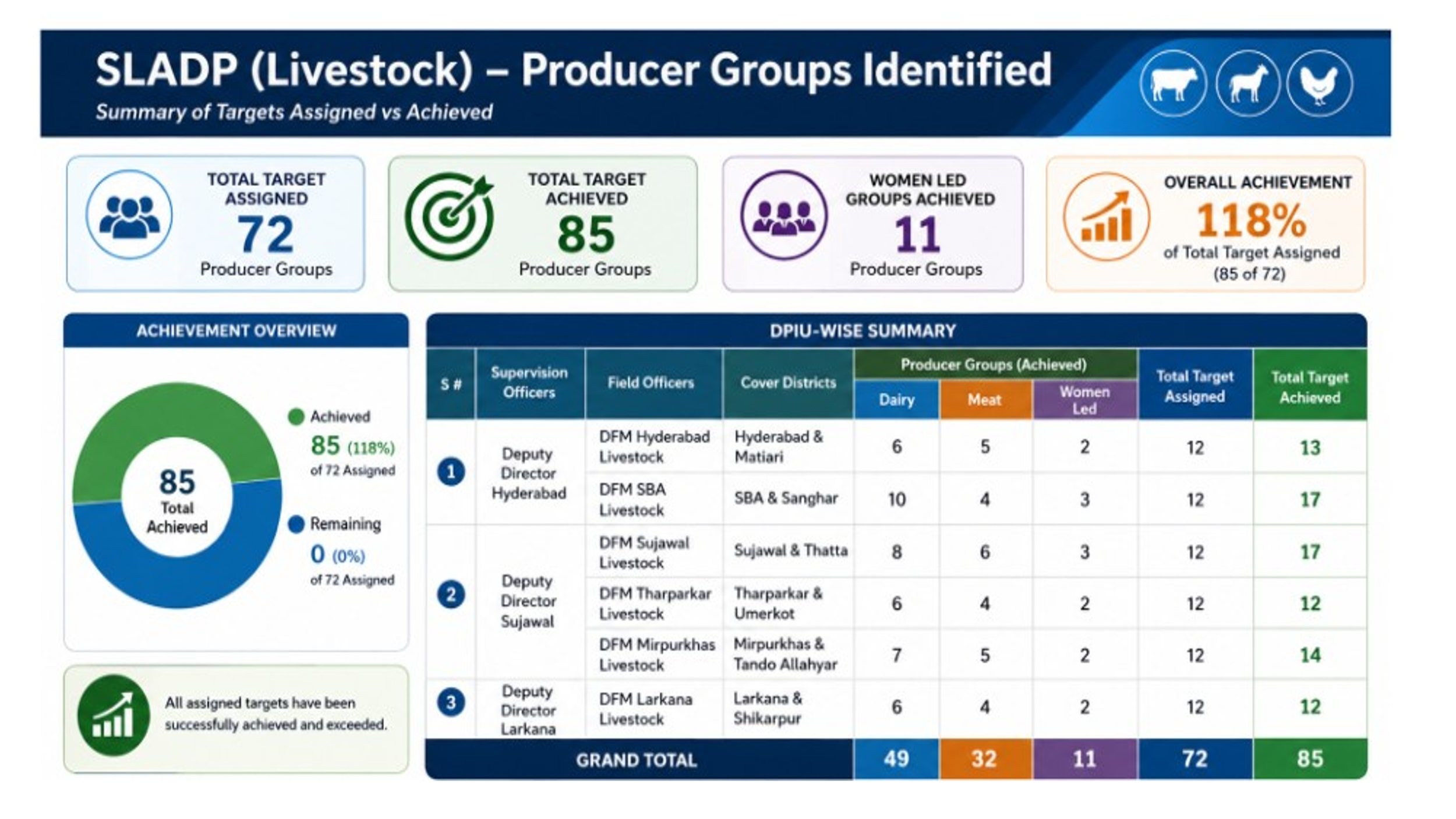
- Formation of 650 Producer Groups (PGs): include 300 dairy, 180 meat, 100 aquaculture, and 70 women-led.
- Developing horizontal and vertical alliances of PGs.
- Financial support for developed Business Plans to 650 PGs.
- Market linkages of PGs.
Core Intervention 3
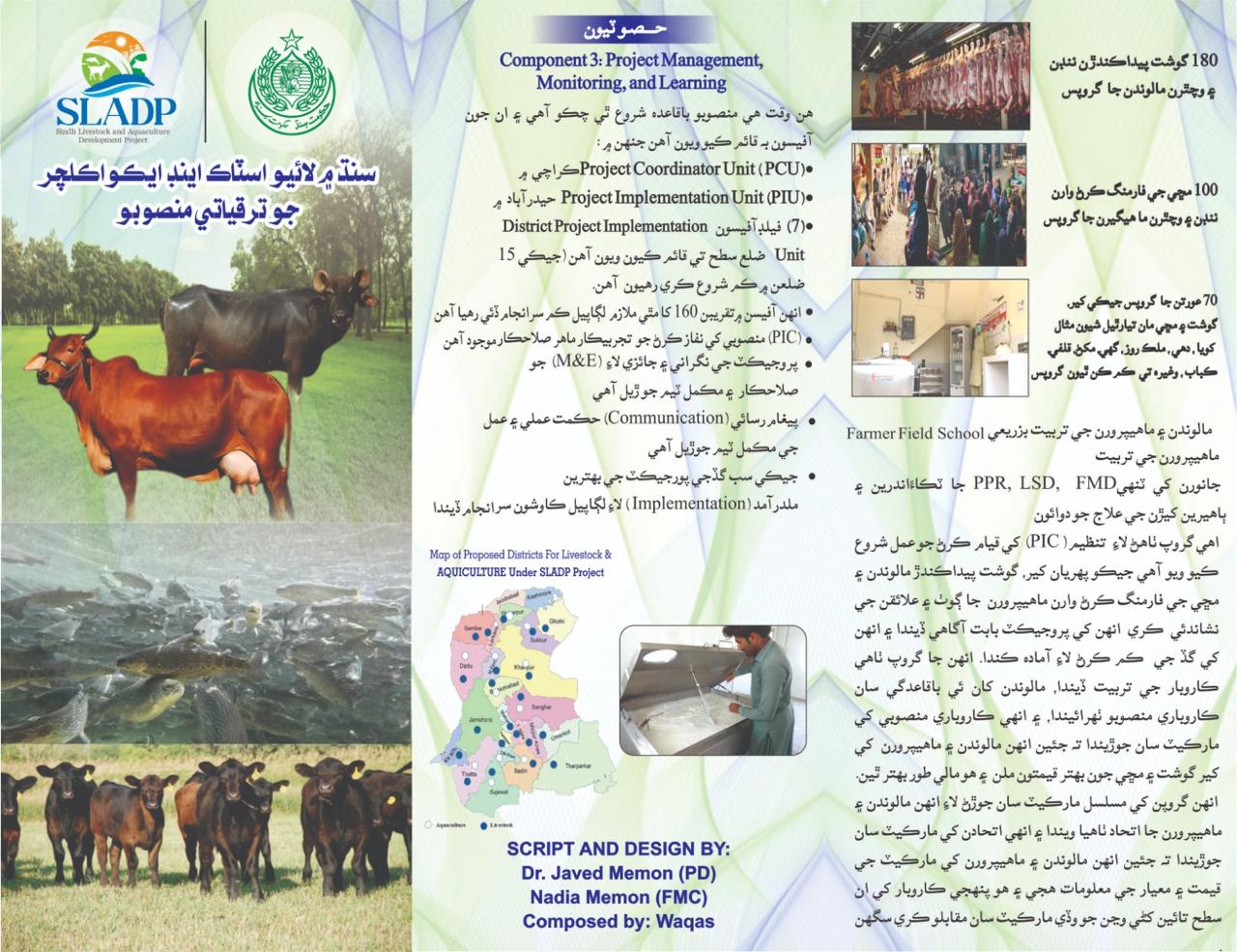
Project Management, Monitoring, and Learning
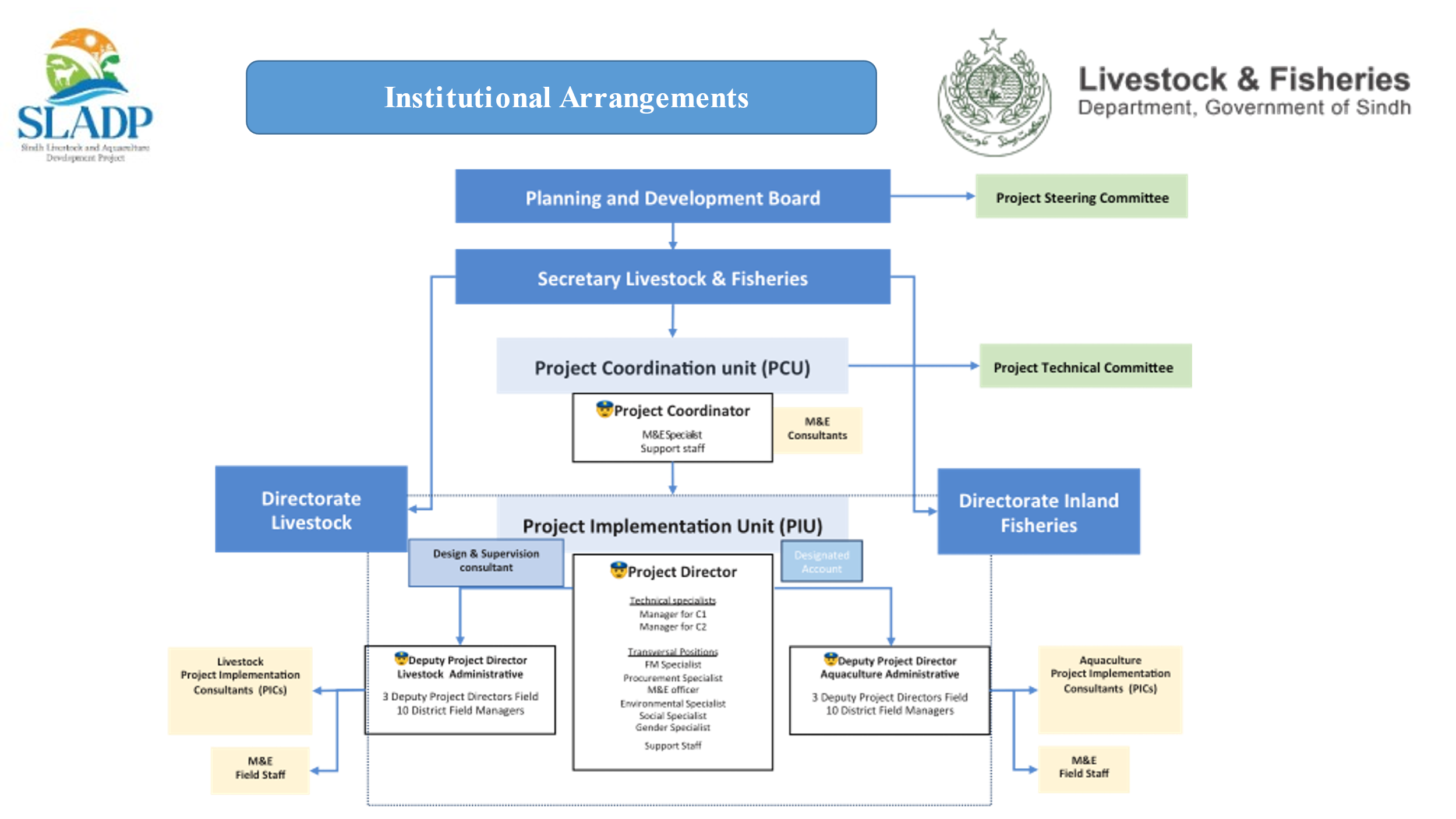
- Implementation arrangements include the establishment of PCU, PIU, and 06 Field Offices in Sujawal, Hyderabad, Mirpurkhas, SBA, Larkana, and Tharparkar, each field office covering two districts.
- Implementation of five digital dashboards for data management, performance monitoring, marketing systems, and decision support.
- Streamlined HR management, inventory tracking, farmer feedback, trade data, and disease surveillance (terrestrial and aquatic).
Project Gallery
Project Videos


 Livestock & Fisheries Department, Government of Sindh, Barrack no # 90 Opposite Sindh Assembly Building, Shahrah e Kamal Atta Turk, Karachi

 02199203291
 09:00 A.M to 05:00 P.M
2026 © Livestock & Fisheries Department